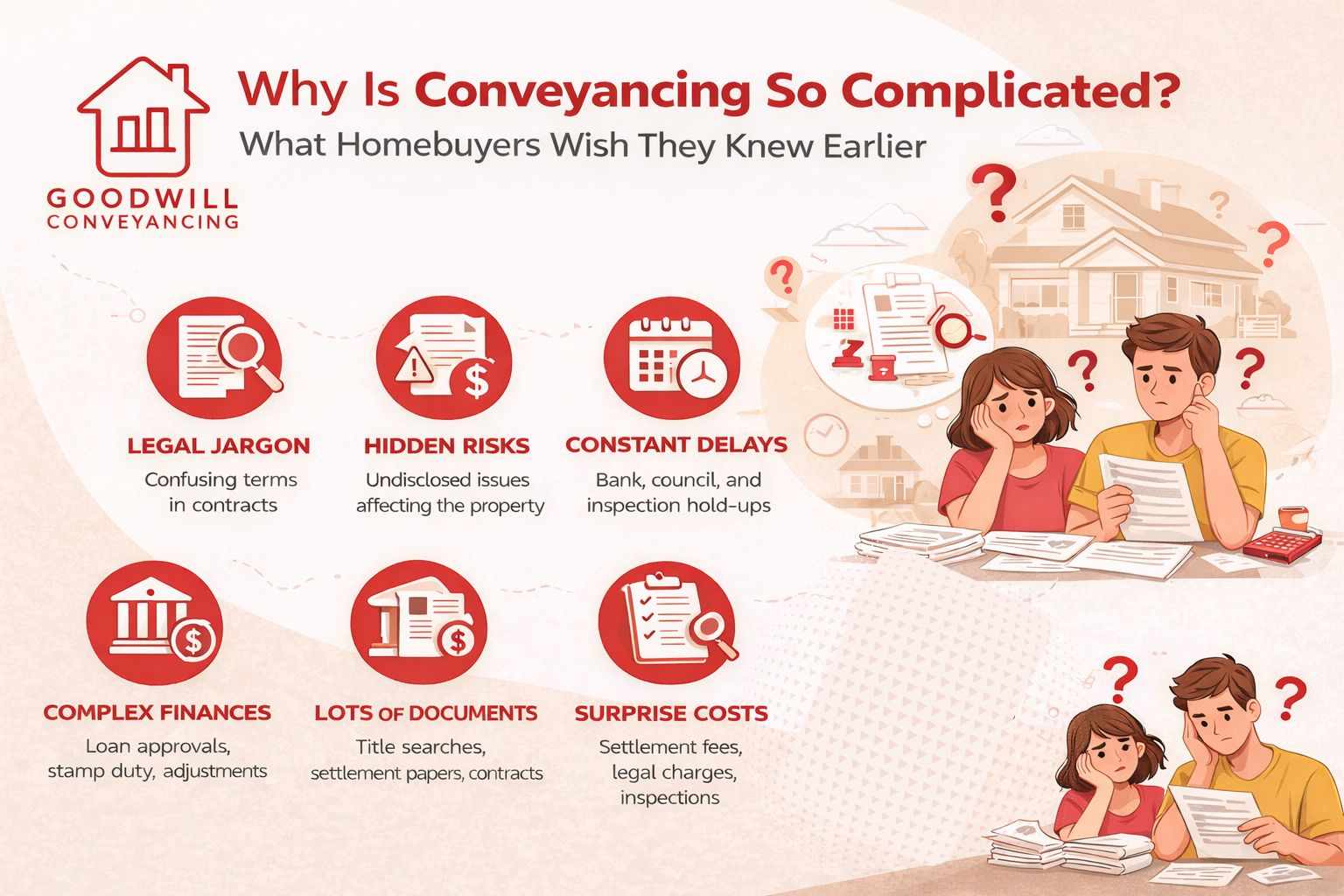
Finding the right property can take time. You might inspect several homes, make two or three offers, and still end up back at the beginning. Each time, there may be another contract to read, another Section 32 to check and another professional fee to consider. Buyers often ask how to manage conveyancing fees on transfer of property and contract review costs without paying for unnecessary work.
The answer is not to skip every review. It is to understand what you are paying for, when a review is useful and how to plan for repeated offers.
Key Takeaways
Every property has its own contract and legal documents.
A previous contract review does not automatically cover a new property.
Review fees can vary depending on the documents and work involved.
Ask what is included before agreeing to a conveyancing fee.
Check whether GST, searches or other disbursements are charged separately.
Do not skip important checks simply because an earlier offer failed.
A conveyancer can help you understand the contract and Section 32 before you commit.
Why Multiple Offers Can Lead to More Conveyancing Costs
Suppose you find a property you really like. The agent sends you the contract and Section 32, so you ask a conveyancer to review them before making your offer.
You pay for the review. Then the seller accepts someone else's offer.
A few weeks later, you find another property. It looks promising, but now you have another contract and another Section 32 to consider.
This is not unusual. Recent Australian property discussions include buyers reporting several unsuccessful offers and paying for separate contract reviews each time. One 2026 Melbourne buyer, for example, reported paying about $300 per review after four unsuccessful offers.
The reason is simple: property contracts are property-specific. The title, Section 32, special conditions, easements and other details can be different from one property to another.
So the previous review cannot simply be copied across to the next property.
Do You Need a Conveyancer to Review Every Contract?
There is no single approach that suits every buyer.
However, Victorian buyers should understand what they are signing before committing to a purchase. Consumer Affairs Victoria recommends that buyers have the Section 32 statement checked by their own legal practitioner or conveyancer before buying. It also says buyers can have a conveyancer review the property title and advise on the contract's terms and conditions.
This becomes particularly relevant when you are making offers quickly.
You may be tempted to think:
“I already had the last contract checked, so this one should be similar.”
That can be risky. A different property can have different ownership arrangements, easements, covenants, zoning information, outgoings or special contract conditions.
The better question is not simply whether you should pay for another review. It is what does this particular property requires, and what the review will cover.
What Does a Property Contract Review Usually Check?
The exact scope depends on the professional you engage and the service you request. However, a review may involve looking at the contract of sale, Section 32 statement and other relevant property documents.
Contract of sale
The contract can set out important details such as:
Purchase price
Deposit
Settlement date
Buyer and seller details
Special conditions
Items included in the sale
Conditions attached to the purchase
Consumer Affairs Victoria explains that a private-sale contract can include conditions such as finance or a building inspection, depending on what the buyer and seller agree to.
Section 32 statement
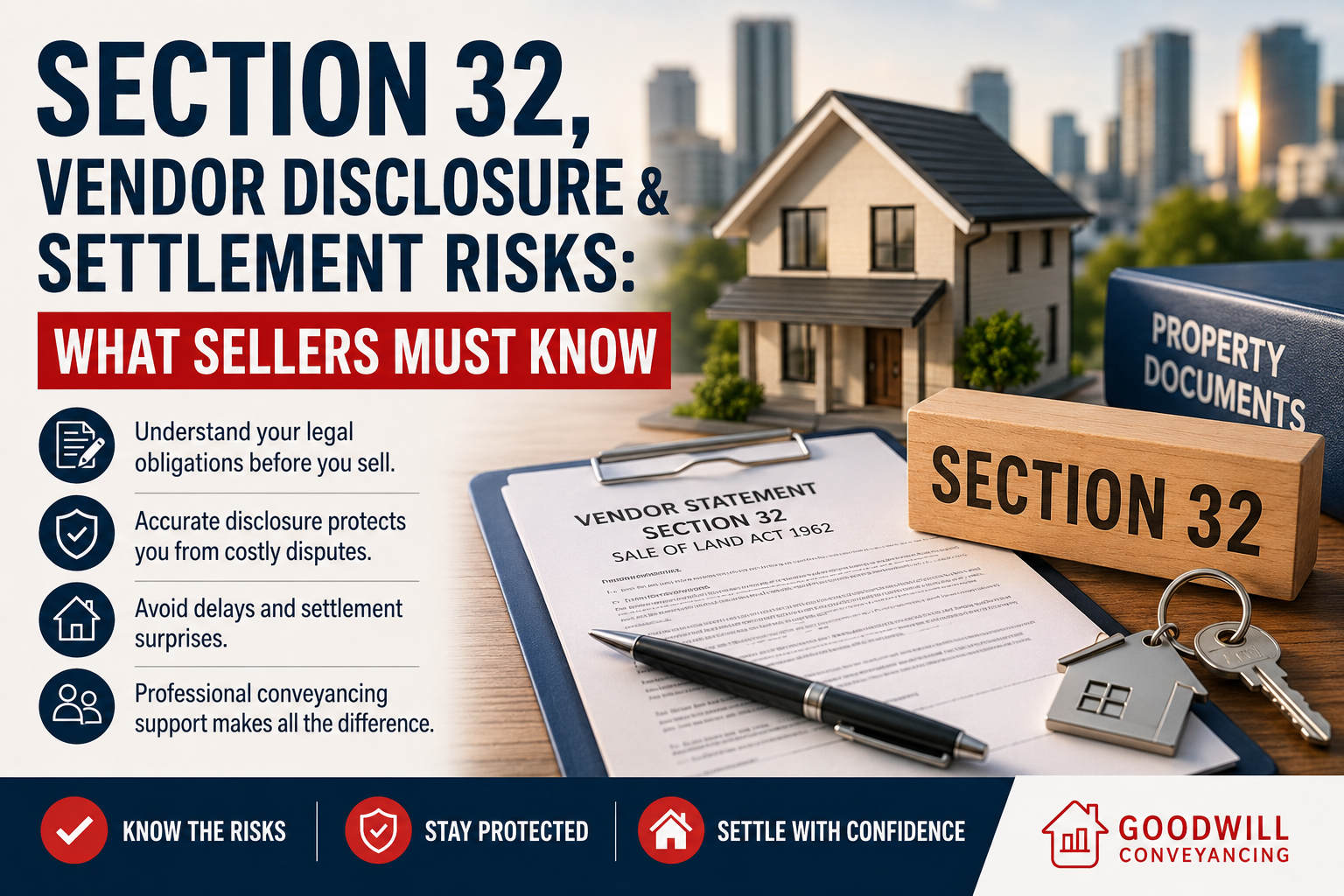
The Section 32 provides information about matters affecting the property.
It can include information about:
Mortgages
Easements
Covenants
Zoning
Outgoings
Certain property-related declarations
Consumer Affairs Victoria also makes an important distinction: the Section 32 does not tell you about the physical condition of the building or whether building work complies with building regulations.
That is why legal document review and building or pest inspections are separate parts of due diligence.
Special conditions
Special conditions can change what you are required to do under the contract.
A conveyancer may explain clauses that affect your obligations, settlement arrangements or other parts of the transaction.
Title information
Title information can reveal matters that may affect ownership or use of the property.
For a buyer who is unfamiliar with property documents, this can be one of the more difficult parts to understand without professional help.
How Much Can Multiple Contract Reviews Cost?
There is no universal price for a property contract review.
A fee can depend on factors such as:
Whether the service has a fixed fee
The length and complexity of the contract
The Section 32 and supporting documents
Whether additional searches are required
How quickly the review is needed
Whether further advice is required
Disbursements or administrative charges
This is why comparing only the advertised price can be misleading.
For example, one service might charge a fixed amount for a defined contract review, while another might charge separately for additional work.
Consumer Affairs Victoria recommends getting written quotes and discussing disbursements and other costs before engaging a conveyancer or legal practitioner.
Why the cost of due diligence needs some perspective
Property itself is a major financial commitment.
The Australian Bureau of Statistics reported that Australia's residential dwelling stock was valued at $12.8 trillion in the March quarter of 2026, an increase of 2.5% during the quarter. Victoria was the only state or territory to record a fall in mean residential dwelling prices during that quarter, at 0.3%.
This statistic does not tell you what a conveyancer should charge. It simply puts the discussion into context: buyers are making decisions involving substantial amounts of money, so understanding the legal documents before signing matters.
How to Manage Conveyancing Review Costs When Making Multiple Offers
If you are actively looking at several properties, there are practical ways to keep your costs clearer.
1. Ask What the Review Includes
Before sending your documents, ask what you are actually paying for.
For example:
Does the review include the contract?
Is the Section 32 included?
Are special conditions checked?
Will unusual clauses be explained?
Are additional searches included?
You will have a much better basis for comparing services when you know what is included.
2. Understand the Fee Structure
Ask whether the quoted amount is:
Fixed
Hourly
Based on the complexity of the documents
Subject to additional charges
Also ask whether GST and disbursements are included.
A low initial quote may not be the final amount if extra work is charged separately.
3. Send the Complete Documents
If you have received the contract, Section 32 and other relevant documents, send them together where possible.
This gives the conveyancer the information needed to look at the transaction as a whole.
It can also reduce unnecessary back-and-forth when time matters.
4. Ask About Future Reviews
If you are expecting to make several offers, ask about the process before you start.
A simple question can save confusion later:
“If this property does not proceed and I need another contract reviewed, how will the next review be charged?”
Some conveyancing businesses may structure their services differently for repeat buyers, so it is worth asking rather than assuming.
5. Keep Each Property Separate
Do not assume that a review of one property answers questions about another.
Property B may have:
A different title
Different easements
Different covenants
Different special conditions
Different settlement terms
Different ownership arrangements
Each new property needs to be considered on its own documents.
6. Do Not Skip Important Checks Just to Save Money
Paying for a review and then losing the property can be frustrating.
But that does not mean the next contract should automatically be signed without checking it.
The aim should be to manage the cost of due diligence, not remove due diligence altogether.
Can You Make an Offer Before Your Conveyancer Reviews the Contract?
This depends on the circumstances and the type of sale.
For a private sale, the contract can include agreed conditions such as finance or a building inspection. Consumer Affairs Victoria explains that a buyer makes a formal offer by signing the contract, and the property is sold when the seller also signs it.
That makes timing important.
If you sign first and plan to have the contract reviewed afterwards, you need to understand exactly what rights and conditions apply to your situation.
Auctions are different again. Consumer Affairs Victoria advises buyers to complete relevant inspections before an auction because buyers generally cannot add conditions to an auction contract without the seller's agreement.
If you are unsure about a contract, getting professional advice before signing can help you understand the terms that apply to that particular property.
What Should You Ask a Conveyancer Before Paying for a Review?
Before engaging someone, ask straightforward questions.
Contract review checklist
What documents will you review?
Does the fee include the Section 32?
Is the quoted fee fixed?
Are GST and disbursements included?
Could additional charges apply?
What happens if I need another property reviewed?
How quickly can you complete the review?
Will you explain unusual or important clauses?
What happens if further advice is required?
What documents do you need from me?
These questions can make it easier to compare services and avoid surprises later.
Consumer Affairs Victoria specifically recommends getting written quotes and discussing disbursements when choosing a conveyancer or legal practitioner.
When Is a Contract Review Particularly Useful?
A professional review can be especially helpful if:
You are buying your first home.
You are unfamiliar with Victorian property contracts.
You are buying at auction.
The contract contains unusual conditions.
The property has easements or covenants.
The title or ownership arrangement is complicated.
You do not understand some of the legal terminology.
You want to understand the Section 32 before making a commitment.
Consumer Affairs Victoria's buyer checklist specifically recommends having a legal practitioner or conveyancer check the Section 32 vendor statement and contract of sale.
This does not mean every buyer needs exactly the same service. The property, documents and circumstances all matter.
What If Your Offer Is Rejected?
This is where repeated review costs can become frustrating.
You may have paid for a review, spent time discussing the contract and then lost the property to another buyer.
The review may still have helped you understand:
How the contract was structured
What special conditions were included
What title issues were present
What questions to ask next time
Which parts of a contract you find difficult to understand
But when you find another property, do not assume the previous review applies to it.
The new property may have completely different documents and risks.
Think of each review as being connected to that property, not to your entire property search.
A Simple Process for Making Multiple Offers
If you are actively looking, your process could look something like this:
Find a property → obtain the contract and Section 32 → check the review cost → have the documents reviewed if appropriate → understand the important terms → decide whether to make an offer → negotiate → proceed if accepted.
The exact process can vary between private sales, auctions and different contract arrangements.
The important part is to understand what you are signing before you become legally committed.
Conclusion
Making several property offers can mean paying for several contract reviews. That can feel frustrating, especially when an offer does not succeed.
But avoiding every review is not necessarily the answer.
A better approach is to understand what you are paying for, ask about the fee structure before sending your documents, check whether additional costs apply and remember that every property has its own legal documents.
For Victorian buyers, the Section 32 and contract of sale can contain important information about the property and the proposed transaction. Consumer Affairs Victoria recommends buyers seek professional advice and obtain written quotes that clearly explain fees and disbursements.
If you are making multiple offers in Melbourne or elsewhere in Victoria, Goodwill Conveyancing can help you understand the conveyancing process and review the documents involved before you move forward.
Frequently Asked Questions
Do I need a conveyancer to review every property contract?
Each property has its own contract and supporting documents. If you want professional advice, the new documents should be considered separately because the title, Section 32, special conditions and other details can differ.
How much does a property contract review cost in Victoria?
There is no single standard price. The cost can depend on the documents, complexity, urgency, additional advice and whether disbursements are involved. Ask for a written quote and confirm what the fee includes before proceeding.
Can I use the same conveyancing review for another property?
A previous review should not automatically be treated as a review of a new property. The new property may have different title information, easements, covenants, special conditions and settlement terms.
Should I get a contract reviewed before making an offer?
Buyers should understand the contract before signing it. Consumer Affairs Victoria recommends having the Section 32 and contract checked by your own legal practitioner or conveyancer before buying.
What should I ask about conveyancing fees before hiring a conveyancer?
Ask what documents are included, whether the fee is fixed, whether GST and disbursements are included, whether additional charges may apply and how another property review would be charged.



Write a comment ...