
Buying a home should feel like a big, happy milestone. But the moment people hear the word conveyancing, the excitement suddenly drops. Stress kicks in. Paperwork starts piling up. And the whole thing feels way more complicated than it should.
Trust me, if you’ve ever felt lost during this process, you’re in good company. Thousands of first-home buyers search for answers every single month. And in the middle of that confusion, many people Google conveyancing in Melbourne only to realise—not very gently—that they had no idea how many legal checks, financial steps, risk assessments, and approvals they were about to face.
So let’s break it down. Here’s why conveyancing feels like a maze, what usually confuses buyers, and what I genuinely wish people knew earlier.
What Exactly Is Conveyancing?
Yes, the official definition says conveyancing is “the transfer of property ownership.” Sounds easy, right?
Except… it isn’t.
Behind those four calm words sits a whole checklist of tasks:
Reviewing the contract of sale
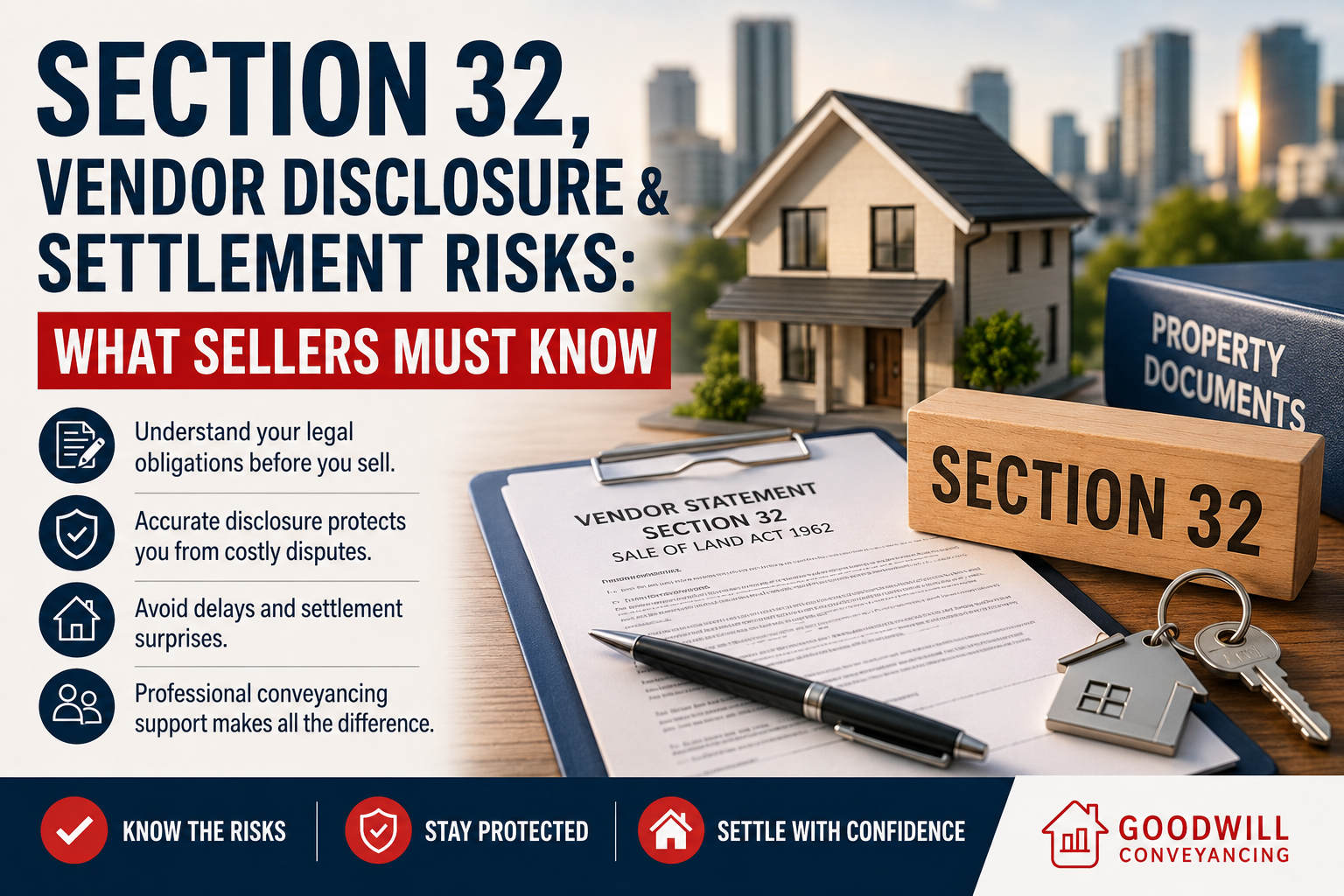
Reading the vendor disclosures and Section 32 line by line
Confirming the title is clean
Checking easements, restrictions, and unpaid rates
Ordering council and authority certificates
Coordinating with banks
Preparing and booking the settlement
Making sure every VIC property transfer rule is followed
And here’s the part that shocks most buyers: one tiny mistake can derail the whole settlement. I’ve seen cases where a missing initial or an incorrect settlement figure caused delays worth thousands.
Even official Australian housing data backs this up—over 21% of settlements get delayed because of paperwork errors, finance issues, or unresolved conditions. And honestly? That number doesn’t surprise me.
1. The Legal Language Makes Everyone Feel Stupid
Property contracts are full of terms that sound like they belong in a courtroom:
Encumbrances
Caveats
Cooling-off rights
Subject-to-finance
Special conditions
For most first-time buyers, these words may as well be written in another language. And here’s where things fail: people just nod through the contract because they don’t want to look clueless.
What actually works is the opposite — asking your conveyancer to explain every line in plain English. The buyers who speak up make fewer mistakes.
My opinion? Legal language protects you, but without someone decoding it, the contract becomes a minefield.
2. Every Property Has Hidden Risks You Can’t See
This is the part that people underestimate the most. That dreamy house or shiny new apartment might have issues buried deep in the paperwork.
Common ones include:
Easements cutting across your backyard
Neighbour disputes
Unapproved extensions
Flood or bushfire zoning
Title defects
Old mortgages are still attached
Council restrictions
These problems often show up only during title searches, easement checks, zoning checks, and compliance reviews—never during a simple walkthrough.
A property can “look perfect” online and still be legally messy. Honestly, this is where 80% of buyer shock comes from.
3. Too Many People Are Involved — and They Don’t Work at the Same Speed
One thing you learn quickly: conveyancing is a group project in disguise.
You’re dealing with:
Banks
Brokers
Real estate agents
Your conveyancer
The seller’s conveyancer
Councils
Government databases
Utilities
And here’s the reality: banks are almost always the slowest. Reports even show that 30–40% of delays come from lenders needing extra time. Another big chunk? Missing or incorrect documents.
What usually fails:
Expecting everyone to be efficient.
What works better:
Keeping your conveyancer, broker, and bank talking to each other early.
4. Government Requirements Make Everything Feel Heavier
Buying a property isn’t just a simple transaction. The government needs a full trail of evidence, identity checks, fees, and compliance steps. This includes:
Verifying your identity
Paying stamp duty
Lodging documents with the land registry
Submitting council property certificates
And let me be brutally honest: land registry systems do not forgive mistakes. A missing tick box or a wrong name can get your documents rejected instantly.
I think this is one of the biggest reasons first-time buyers feel overwhelmed—it’s a lot of rules, and none of them is flexible.
5. Loan Approvals Don’t Align with Settlement Deadlines
This part frustrates almost every buyer.
Even after your loan is approved, banks still need to:
Recheck the documents
Prepare mortgage paperwork
Confirm the settlement amount
Issue settlement authority
Book the settlement slot
And depending on your lender, this can be fast… or painfully slow. The Reserve Bank of Australia even notes that processing times vary widely between banks.
What fails often:
Assuming “loan approval” means everything is ready.
What actually works:
Getting your broker and conveyancer in sync from day one.
6. The Paperwork Pile Is Much Bigger Than People Expect
Most buyers think the contract and Section 32 are the whole story. Nope.
A typical conveyancing file can include:
Section 32/vendor statement
Contract of sale
Certificates from water, land, rates, and planning
Title documents
Property compliance checks
Bank documents
Settlement statements
All up, 40–70 pages is completely normal. And every detail must match across multiple sources.
My opinion? It’s not “too much paperwork”—it’s just paperwork nobody prepares you for.
7. The Extra Costs Always Catch First-Time Buyers Off Guard
Nobody tells buyers upfront that conveyancing has add-on costs like:
Council and authority searches
Stamp duty
Title search fees
Rate adjustments
Bank settlement charges
Inspection fees
These aren’t “hidden,” but they definitely feel unexpected.
What works: asking for a cost breakdown early.
What fails: Googling “cheap conveyancing” and assuming everything is included.
8. One Small Error Can Cost Thousands — Which Is Why Everything Is Double-Checked
A typo in a name.
A wrong date.
A missing disclosure.
A title restriction was overlooked.
Any of these can turn into penalty fees or even settlement failure. So yes, conveyancers are extremely careful—and sometimes painfully slow—because they have to be.
My honest judgement: speed is great, but accuracy saves you money.
9. The Timeline Is Longer Than Most Buyers Expect
Here’s the usual sequence:
Sign the contract
Cooling-off period
Finance approval
Title and property checks
Vendor disclosure review
Bank coordination
Booking settlement
Final inspection
Settlement day
The problem? Every step depends on the one before it.
This is why even a tiny delay early in the process creates a domino effect.
10. Digital Conveyancing Helps — but It’s Not Magic
Platforms like PEXA make settlement faster and more convenient, but they don’t solve everything.
Digital tools can lodge documents.
They cannot:
Interpret contract conditions
Spot unusual clauses
Analyse risks
Negotiate with the seller
Explain the process in simple words
Technology is great, but human judgment is what keeps you safe.
What Homebuyers Wish They Knew Earlier
These are real, common regrets from buyers:
“I didn’t know contracts had hidden conditions.”
“I thought digital conveyancing was instant.”
“I didn’t expect settlement dates to change.”
“My bank was way slower than I expected.”
“There were more costs than I planned for.”
Almost every regret comes down to one thing: surprise.
How to Make Conveyancing Feel Less Complicated
Here’s what genuinely helps:
✔ Pick a conveyancer who explains things in normal English
✔ Ask for a full cost breakdown early
✔ Send documents quickly
✔ Keep your broker and conveyancer connected
✔ Expect delays—they’re normal
✔ Never hesitate to ask questions
Information reduces anxiety. Good communication prevents delays.
Conclusion
Conveyancing feels complicated because it mixes law, finance, government requirements, strict deadlines, and lots of moving parts. But with the right guidance, it doesn’t have to feel overwhelming.
At Goodwill Conveyancing, we simplify the process—breaking things down clearly, managing risks, and keeping your settlement on track so you can move into your new home with confidence instead of stress.
FAQs
1. Why does conveyancing take so long?
Because banks, councils, conveyancers, and agents must complete tasks in order. One delay affects everything.
2. Is online conveyancing faster?
It can be, but legal checks still require human review. Digital tools speed up paperwork—not legal analysis.
3. What causes settlement delays?
Finance hold-ups, incorrect documents, missing certificates, slow bank processes, or complex contract conditions.
4. Do I really need a conveyancer?
Yes. Even simple properties can have hidden issues like easements, unpaid rates, zoning restrictions, or unapproved structures.
5. How much does conveyancing cost?
Costs vary depending on searches, government fees, legal work, and inspections. Many people underestimate adjustments and bank charges.




Write a comment ...